
Hunting Etruscans: A Quick Guide to Tombs, Art and Hidden Treasures on the Umbria–Tuscany Border
Amongst the olive trees and grape vines, the aromas of lavender and rosemary compete like fragrant divas for attention. In the heady air, it is not hard to believe yourself to be in the heart of ancient Etruria.
Etruscans, long before Rome’s inexorable rise to power, shaped these footpaths and byways, painted tombs and carved caves into volcanic tufa cliffs. Priests read the sky for signs from birds whose descendants still fly above you overhead. Powerful city-states sat on hilltops overlooking fertile valleys and planted some of the world’s first vineyards in the fertile soil.
From Gioiella, some of central Italy’s most remarkable Etruscan sites are within easy reach. Days unfold between archaeology, vineyards, and lakes. The Etruscan tombs of Chiusi, the inscriptions of Cortona, and the wine-scapes in the area of modern-day Montepulciano. There are moments when the past feels so close you can almost hear the sound of ancient footsteps.
Visitors exploring Tuscany and Umbria today will find some of the best-preserved Etruscan tombs, museums, and archaeological landscapes within easy reach of Lake Trasimeno.
Who Were the Etruscans?
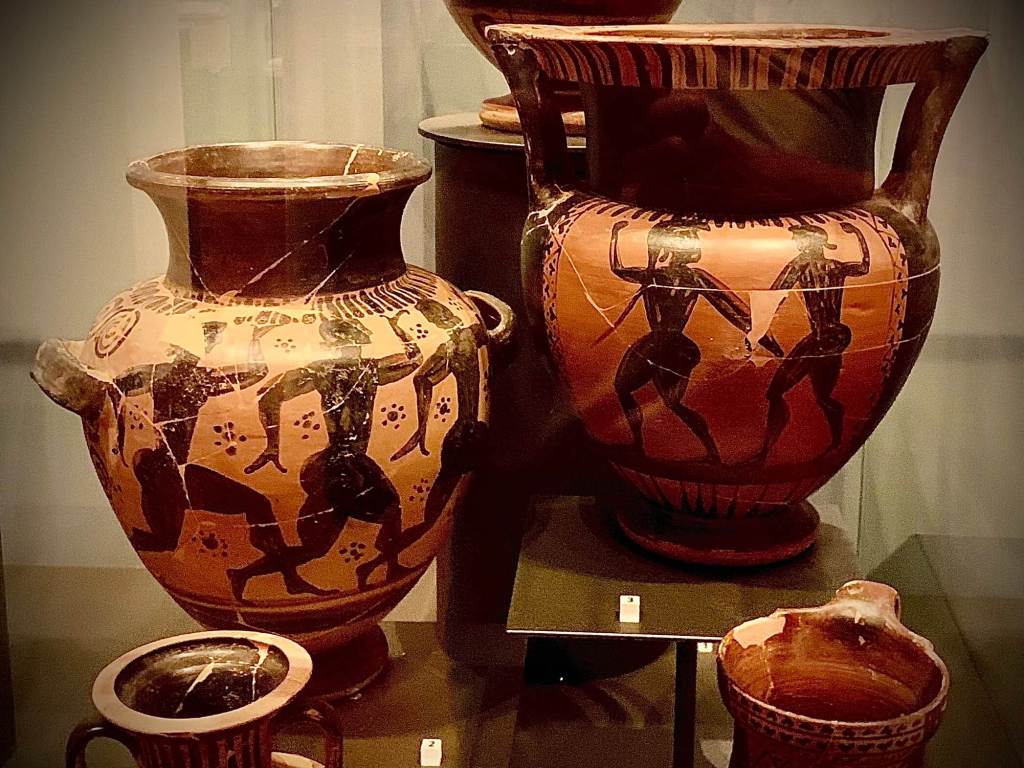
The Etruscans were a remarkable civilisation that flourished in central Italy (modern Tuscany, Umbria, and Lazio) from around the 9th century BCE. Their origins have long fascinated historians: some ancient sources suggested migration from Lydia in Asia Minor, while modern archaeology and genetics indicate they were largely indigenous to Italy, with cultural influences from the eastern Mediterranean. The Etruscans were known to the Greeks as ‘Tyrrhenoi’ and were already a force in the Mediterranean centuries before Rome even took its first baby steps. Greek colonists, while trading and settling Magna Graecia in southern Italy (from the 8th century BCE), recorded encounters with these skilled artisans, farmers, and traders. The Etruscans, however, called themselves Rasenna. It was the Romans who, much later, referred to them as Etrusci or Tusci – the root of ‘Tuscany’ and the ‘Tyrrhenian Sea.’
Etruria, Home of the Etruscans

At the height of their civilisation, in the 6th century BCE, Etruscan influence extended north into the Po Valley and south into Campania, before contracting under Roman expansion. Today, we typically associate Etruscan territory with southern Tuscany, northern Umbria, and parts of Lazio. Important cities included Chiusi (ancient Clevsin), Cortona (Curtun), Volterra (Velathri), and Perugia. The hills around modern-day Montepulciano, as well as smaller settlements scattered across the hills surrounding Lake Trasimeno, formed part of the wider Etruscan landscape. As did Citta della Pieve, Paciano, and the rich plains near Perugia. Further west, Etruscan influence extended to the Tyrrhenian coast, encompassing key trading ports such as Tarquinia and Cerveteri. Inland territories extended towards the Tiber Valley, connecting communities through agriculture, craft, and commerce. This network of city-states, was autonomous yet culturally linked, forming a culture that was simultaneously strategic, fertile, and steeped in ritual and tradition. Today, their legacy still endures in hilltop towns, museum galleries, and landscapes dotted with grapes and olive trees.
What Did Etruscans Look Like?
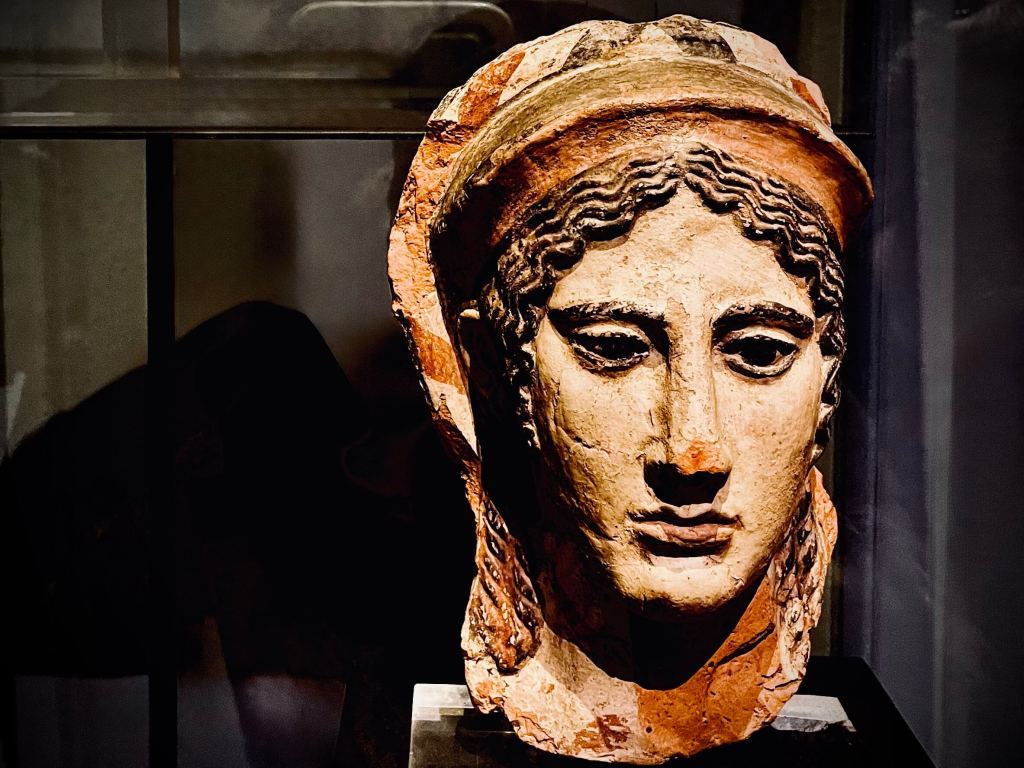
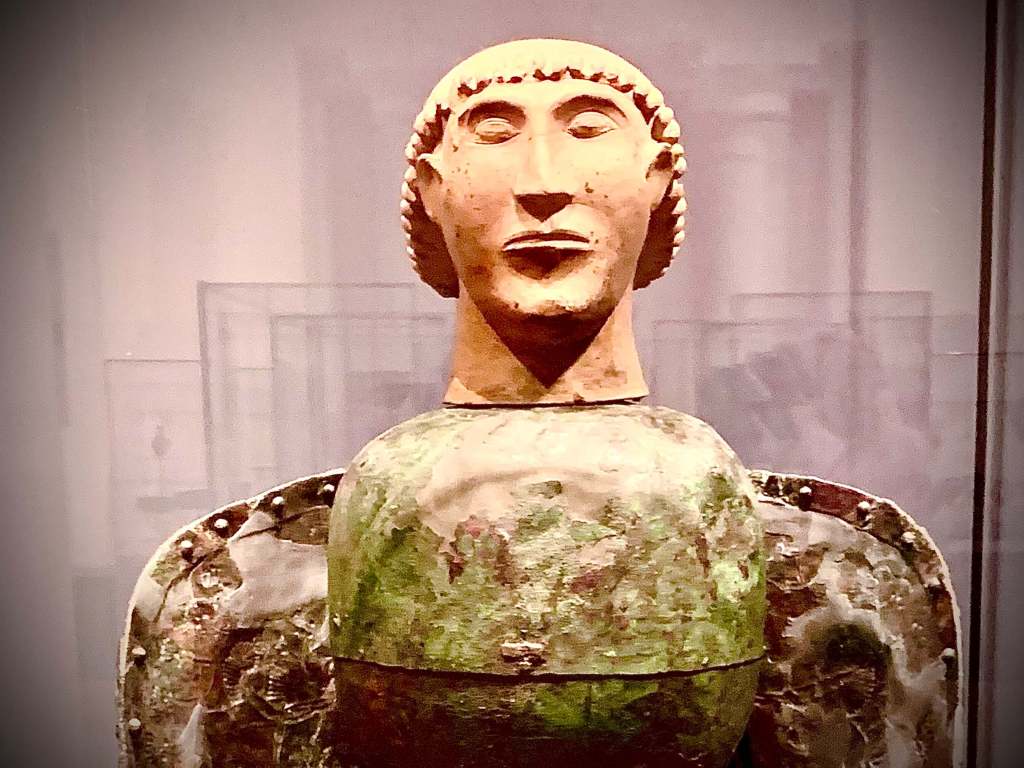
Our understanding of Etruscan appearance comes largely from tomb frescoes, bronze mirrors, and sculpted sarcophagi. Men and women are portrayed with striking vitality, typically shown with dark hair, expressive eyes, and Mediterranean complexions. Their features are rendered with confidence and individuality. Men often appear in short tunics or cloaks, sometimes reclining at banquets, while women are depicted in flowing robes, adorned with finely worked jewellery and elaborate hairstyles. Unlike many ancient cultures, Etruscan women are portrayed side-by-side with men in social scenes, offering unusually vivid glimpses of posture, dress, and personality. Though idealised, these images suggest a people who valued elegance, presence, and participation in communal life, their likenesses preserved in stone and pigment across the hills of Etruria.
Where to See Etruscans
Visitors can still encounter these faces and gestures in tombs and the museums of Chiusi and Cortona. Painted chambers of tombs preserve lively banquet scenes and musicians, figures captured mid-movement, offering rare insight into clothing, posture, and expression. Further west, in Tarquinia, the UNESCO-listed Necropolis of Tarquinia contains vividly coloured frescoes where reclining couples, dancers, and athletes seem almost animated across the walls. In Volterra, sculpted sarcophagi at the Guarnacci Etruscan Museum present reclining figures carved in stone, their hairstyles, jewellery, and facial features rendered with striking individuality.
Standing in these spaces, the Etruscans cease to be abstract ancestors. They become recognisable, human, and unexpectedly present.
Many of the most evocative Etruscan sites lie within easy reach of Villa Gioiella. The museums of Chiusi and Cortona invite unhurried morning explorations, close enough to return for a long lunch overlooking the hills. Montepulciano’s vineyards and historic streets make a natural companion to an afternoon of wine and wandering.
Further afield, the journey becomes part of the experience. A drive to Volterra traces a slow arc through classic Tuscan countryside, rewarding visitors with sculpted sarcophagi and sweeping views. To the west, near the Tyrrhenian coast, Tarquinia’s extraordinary painted tombs offer one of the most vivid encounters with Etruscan life and belief, best savoured as a dedicated day’s adventure.
Etruscan Society and Daily Life
Etruscan society was built around independent city-states, meaning each city, such as Chiusi or Cortona, had its own government, laws, and religious practices, yet collaborated and competed within the Etruscan league (Dodecapoli). Chiusi was a leading city-state, made wealthy from fertile land, trade, and metalwork.
Family Life and Social Structure
Families were the cornerstone of society. Each independent city-state held a vibrant community of interlinked families, clans, and artisans. At the heart of these city-states were extended households, where multiple generations shared central courtyards, kitchens, and workshops, blending domestic life with craft and trade. Kinship defined both daily routines and civic identity: elite families wielded political authority, sponsored monumental tombs, and guided religious rites, while farmers, artisans, and merchants formed the backbone of the economy. Social gatherings, feasts, and public ceremonies were opportunities to display wealth, reinforce alliances, and transmit lineage, embedding each household within the city-state’s broader cultural and political network. The result was a society that balanced autonomy, tradition, and communal responsibility, where families were both the engine and the mirror of Etruscan civic life.
Women in Etruscan Society

Unlike many ancient Mediterranean cultures, evidence suggests elite Etruscan women enjoyed remarkable social freedoms and visibility. They appear frequently in tomb frescoes and banquet scenes, often dining, conversing, and celebrating alongside men — a striking contrast to the largely domestic and restricted roles of women in early Rome or Greece. Scholars believe this elevated status arose from cultural, religious, and legal traditions unique to Etruria: women could own property, inherit land, and manage households independently, giving them economic as well as social power. Elite women also played an active role in religious rituals and family-sponsored tomb ceremonies, asserting influence in both civic and spiritual life. This visibility and agency suggest a society that valued kinship, lineage, and communal participation, with women integral to both the family and the city-state’s identity. Figures such as Etruscan prophet, Tanaquil, wife to Rome’s fifth king, Tarquinius Priscus, whose visions shaped early history, are remembered for their political acumen, particularly in matters of succession and dynastic affairs. Even unnamed women in frescoes are celebrated for their presence in banquets, music, and ritual, reflecting their integral role in both family and society.
Work, Craft and Agriculture

Agriculture was the heartbeat of Etruscan society, sustaining families, trade, and rituals. Olive trees, grapevines, and cereals thrived on the gentle slopes of central Italy, while farro, barley, and emmer wheat formed the staples of their diet. Extended families often worked the land together, sharing courtyards and workshops, blending domestic life with productive labour.
Etruscans were innovative farmers, developing and refining terracing, drainage systems, crop rotation, and mixed planting suited to central Italy’s hills. Vineyards were integrated with olive groves and cereal fields, reflecting a holistic, sustainable approach to land use.
Local cuisine still echoes Etruscan practices. Farro soups, seasonal legumes, and grilled vegetables remain staples in Chiusi, Cortona, and Montepulciano. Around Lake Trasimeno, modern farms cultivate grape varietals and olives once tended by Etruscan hands, offering visitors a living connection to ancient terroir and culinary heritage.
Etruscan Viticulture: The Roots of Italian Wine

The Etruscans were early innovators of wine culture in central Italy. They carefully selected grape varietals suited to Tuscany and Umbria. Archaeological evidence confirms this, and some scholars suggest early ancestors of modern varietals such as Sangiovese, Canaiolo, and Malvasia may descend from vines cultivated in Etruscan times.
Grapes were harvested by hand and fermented in clay amphorae, sometimes with herbs or resins to preserve flavour.
Wine served multiple roles: a daily staple, a religious offering, a social ritual, and a trade commodity. Amphorae found in tombs and settlements reveal that local vintages reached Greek colonies, Phoenician ports, and inland communities, demonstrating the Etruscans’ commercial sophistication. Modern wines such as Vino Nobile di Montepulciano and Chianti Classico trace their roots to these ancient vines, offering a direct sensory connection to Etruscan ingenuity.
Craft and Community: Artisanship in Daily Life

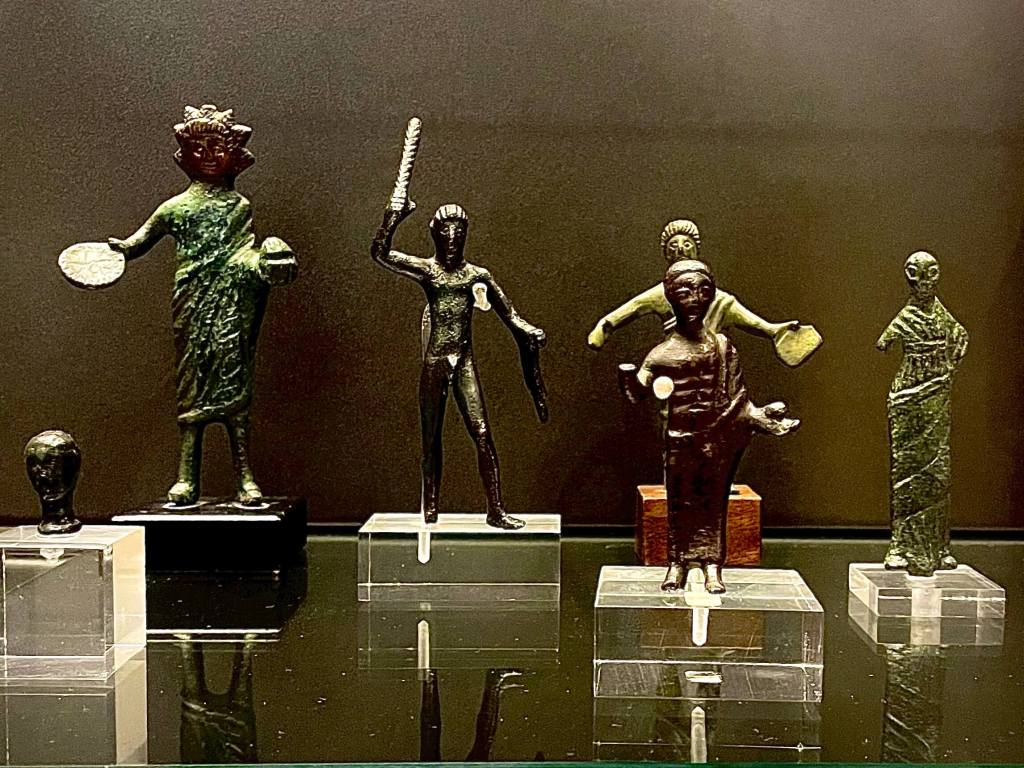
Alongside farming, skilled Etruscan artisans produced bronze mirrors, candelabras, and statuary, often engraved with myths, banquets, and musical scenes. Markets in Chiusi, Cortona, and surrounding towns enabled the exchange of metals, ceramics, and agricultural produce, linking city-states across Etruria.
Rituals, Magic, and Belief: The Spiritual Life of the Etruscans
The Etruscans were deeply religious and highly ritualised, blending practical decision-making with spiritual observance. Religion was woven into daily life, civic duties, and family ceremonies, and priests and diviners acted as intermediaries between humans and the divine.
Augury: Reading the Skies

Observing birds in flight helped Etruscans interpret omens and make decisions.
Augurs observed the flight patterns of birds, clouds, and celestial signs to interpret the will of the gods. Literary sources suggest these readings influenced everything from military campaigns to city planning, ensuring that decisions were aligned with divine favour.
Haruspicy: The Art of Divination
Haruspices examined the internal organs of sacrificed animals, particularly livers, to predict future events or confirm the outcome of major decisions. This was a highly specialised role. They built their reputation as trusted experts, blending sacred ritual knowledge with sharp, methodical observation. Their guidance could sway both family and state. While most known haruspices appear to have been men, evidence suggests that elite women participated in religious rites and may have held ritual authority in certain contexts.
The Bronze Liver of Piacenza

One of the most fascinating remnants of Etruscan religious thought is the Bronze Liver of Piacenza, dating from around the late 2nd century BCE. It is a life-sized votive model of a sheep’s liver inscribed with sections representing divine domains. It is widely interpreted as serving as a teaching tool for haruspices, mapping the heavens onto the internal world and demonstrating the Etruscans’ systematic approach to divination. Today, it can be seen at the Museo Civico Archeologico in Bologna, a testament to the sophistication of Etruscan ritual science.
Funerary Rituals: Honouring the Dead

Etruscan tombs were elaborate, reflecting both social status and spiritual belief. Banquet scenes, musical depictions, and painted frescoes suggest a view of the afterlife as a continuation of earthly pleasures. Families held sacred banquets and offerings, connecting the living with ancestors and reinforcing lineage and communal bonds.
The Etruscan Language

The Etruscans left behind thousands of inscriptions — on tomb walls, bronze mirrors, temple offerings, and legal tablets — written in their own language. They used a script adapted from a Greek alphabet introduced through early trade, and today we can read Etruscan phonetically with relative ease. Yet understanding it is another matter. The language itself is not Indo-European and shares no close relatives with Latin or Greek, making full translation difficult. We recognise names, titles, family relationships, and legal formulas, but many words remain elusive. Traces of their vocabulary filtered into early Latin, influencing the Rome that would later eclipse them. What survives is a civilisation that can still be sounded out letter by letter — but not entirely translated — its voice echoing across stone with meanings partly preserved, partly withheld. One of the most remarkable examples of this written legacy is the bronze Tabula Cortonensis, discovered near Cortona, whose carefully inscribed lines preserve the formal language of land agreements and civic obligation.
Rare surviving inscriptions provide tangible glimpses into Etruscan law and civic life. The Tabula Cortonensis, a bronze tablet discovered near Cortona, records civic rules with remarkable clarity, has been interpreted as expressing principles similar to:
“The property of the people shall remain inviolate, and no one shall claim it without witness and oath.”
The tablet records a complex land agreement, demonstrating a sophisticated legal culture concerned with property, witnesses, and formal oath.
A Linguistic Mystery: Who Were the Etruscans Related To?
For centuries, scholars have tried to determine where the Etruscan language fits within the map of ancient Europe. It is not Indo-European and therefore unrelated to Latin, Greek, Celtic, or the later Romance languages of Italy. Instead, most linguists now group it within a small and ancient family known as Tyrsenian, alongside two fragmentary languages: Rhaetic, once spoken in the Alpine regions of northern Italy and Austria, and Lemnian, attested on the island of Lemnos in the Aegean Sea.
These linguistic cousins share grammatical structures and similar word endings, suggesting a deep prehistoric connection. Whether this reflects migration, maritime networks, or an older linguistic layer that once stretched across parts of the Mediterranean remains debated. What is clear is that Etruscan represents a surviving echo of a Europe that existed before Latin became dominant. It can still be read aloud from stone and bronze — but its deeper meanings continue to invite careful study and patient curiosity.
While their written words remain partially veiled, the landscapes they shaped remain entirely tangible — and can still be explored today.
Etruscan Art and Artisanship

Anonymous Masters of Etruria
Unlike many Greek artists of the Archaic and Classical periods (such as Exekias and Euphronios), who sometimes signed their ceramics, Etruscan painters and sculptors rarely left their names behind. Artistic identity in Etruria was more often expressed through workshop traditions than individual signatures.
Yet individuality did exist. The so-called Micali Painter, a late sixth-century BCE master of black-figure pottery, takes his modern name not from antiquity but from the 19th-century Italian collector Giuseppe Micali, who once owned several vases attributed to this artistic hand. His real name is lost, but his distinctive drawing style, figure types, and decorative patterns allow scholars to recognise his work with confidence.
Similarly, the painter of the Tomb of the Leopards in Tarquinia and the sculptors of the Tomb of the Reliefs in Cerveteri left visual signatures so coherent that entire works can be attributed to their hand or workshop.
In Etruria, artistic fame survives not in biography but in brushstroke, carving technique, and the enduring confidence of form.
Looted Etruscan Art: Loss and Return
Not all of Etruria’s treasures remained in the earth. For generations, tomb robbers known as tombaroli unearthed ceramics, bronzes, and jewellery from ancient burial sites, often removing them from their archaeological context and dispersing them far from the landscapes that shaped them. When an object is taken without record, something intangible is lost alongside it: the story of where it lay, beside whom, and why.
Some have found their way home. The celebrated Euphronios Krater, looted from Cerveteri in the 1970s and later acquired by the Metropolitan Museum of Art in New York, was returned to Italy in 2008 after evidence of ‘illicit excavation’ came to light. Several important Etruscan vases and funerary objects formerly held by major American museums, including pieces once displayed at the Getty Museum, have also been repatriated following investigations into illicit antiquities networks. Today, many of these works are housed in regional museums in Cerveteri, Tarquinia, and Chiusi, closer to the necropolises from which they were taken.
And here, in the quiet hills between Umbria and Tuscany, where fields still roll toward ancient sites and cypress trees trace old boundaries, the past feels less like something lost and more like something patiently waiting. Their journeys remind us that heritage is not only about preservation, but about belonging.
Famous Etruscans: Kings, Queens, and Legendary Figures

From the hills of Etruria to the early streets of Rome, Etruscan rulers and influential figures left legacies that shaped politics, power, and history across the region.
Etruscan influence radiated far beyond art and craft, reaching into leadership and legend. Even though myth colours parts of the story, historical sources and Roman tradition continue to remember several key figures:
-
Lars Porsena – King of Clusium (Chiusi), famed for his siege of Rome in the early 5th century BCE.
-
Lucius Tarquinius Priscus – Traditionally considered the first Etruscan king of Rome (late 7th–early 6th century BCE).
-
Tanaquil – Queen of Tarquinius Priscus, renowned for her political skill; she reportedly guided her husband to the throne and safeguarded the succession of Servius Tullius (late 7th–early 6th century BCE).
-
Servius Tullius (Mastarna) – The sixth king of Rome, associated in some traditions with Etruscan heritage (mid 6th century BCE).
-
Arruns and Lucius Tarquinius Superbus – Members of the later Tarquin dynasty, central to the end of Etruscan kingship in Rome (late 6th century BCE).
These figures survive not only in Roman histories but in the enduring echoes of Etruscan political power, illustrating how leadership and legacy can endure long after dynasties have passed.
What Happened to the Etruscans?
By the late 4th century BCE, the once-powerful Etruscan cities of central Italy were in decline. Rome’s expansion gradually absorbed Etruscan territories, while pressures from Celtic invasions, internal rivalries, and shifting trade networks weakened the independent city-states. The Romans did not wipe out the Etruscans; instead, they gradually absorbed them into Roman society. Although the Etruscan language faded over time, the Romans adopted many of their customs, religious practices, and artistic styles, embedding Etruscan influence deeply into Roman architecture, engineering, sculpture, and urban planning.
Today, there are no distinct “Etruscan” populations. Still, their legacy remains throughout Tuscany, Umbria, and Lazio, visible in ancient ruins, necropolises, inscriptions, and the very layout of towns like Chiusi, Tarquinia, and Cerveteri. Through archaeology and enduring cultural traces, the Etruscans continue to shape our understanding of early Italy, long after their political independence disappeared.
A day exploring Etruscan Tuscany and Umbria from Villa Gioiella is more than a historical excursion. It is a chance to step into a civilisation that shaped central Italy’s identity and to experience a landscape where past and present exist in quiet conversation. The stones remember. The vines endure. And the story is still unfolding beneath your feet.
Day Trips from Villa Gioiella
Discover Chiusi and the Umbrian-Tuscan border, where Etruscans once thrived. Book your stay at Villa Gioiella and walk the paths of ancient Clusium yourself. CONTACT
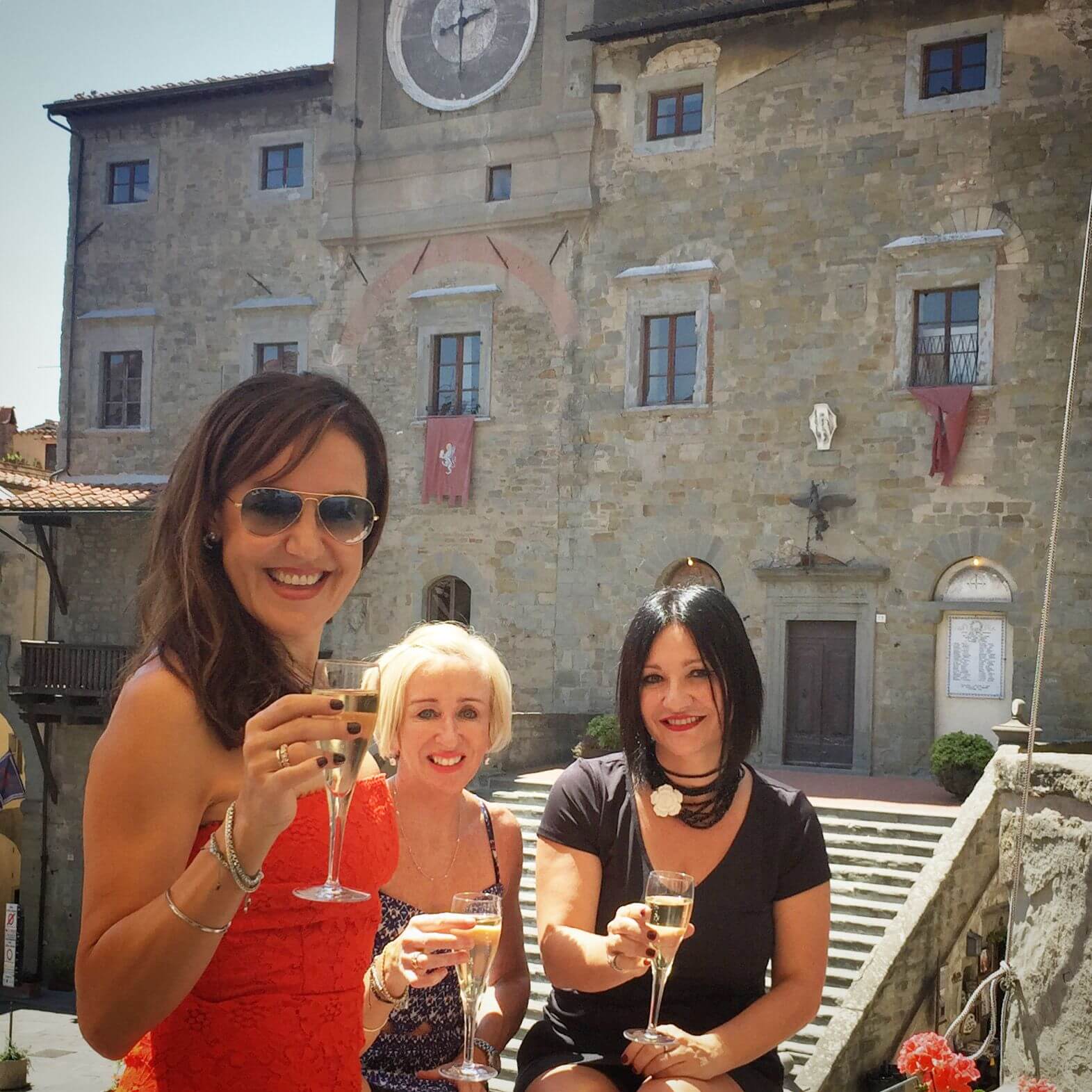
As the light softens over Lake Trasimeno and the hills shift from gold to rose, it’s easy to understand why the Etruscans chose this landscape. Their cities once crowned these ridgelines, their vineyards lined these slopes, and their rituals unfolded beneath these same skies. What remains today — the Etruscan tombs of Chiusi, the inscriptions of Cortona, the wine estates of Montepulciano — is not just archaeology, but continuity. Today’s farmers cultivate the same fields, press olives from the same hills, and pour wine on the same earth where ancient hands once laboured.
Landmarks to Visit Today
Chiusi — Necropolis of La Montagnola & Museo Nazionale Etrusco
Ancient Clevsin
Once one of the most powerful cities of Etruria, Chiusi preserves a remarkable concentration of tombs, inscriptions, and artefacts that illuminate Etruscan civic and funerary life.
Monumental Features
• The Tomb of the Ship, named for its carved architectural beams resembling an overturned hull
• Painted sarcophagi and underground chamber tombs cut into tufa
• Extensive epigraphic evidence preserving personal and family names
Museum Highlights — Museo Nazionale Etrusco di Chiusi
One of central Italy’s most important collections of Etruscan material culture, including:
• Gold jewellery and bronze mirrors
• Bucchero ceramics
• Inscriptions and funerary urns
Visitor Information
📍 Via Porsenna 93, 53043 Chiusi (SI), Italy
🕐 Typically open 08:30–20:00 (seasonal variations apply)
Castiglione del Lago — Lake Trasimeno Landscape
Overlooking Lake Trasimeno from its fortified promontory, Castiglione del Lago occupies a landscape shaped by centuries of human settlement, including Etruscan agricultural and trade networks connected to the inland waterways.
Cultural Features
• Hilltop medieval town built atop earlier foundations
• Panoramic views across Lake Trasimeno, historically part of the wider Etruscan territory
• Archaeological artefacts discovered in the surrounding countryside, including near Gioiella
While not a major excavated necropolis site, the setting offers geographical context for understanding how Etruscan communities interacted with fertile lake plains and strategic routes.
Cortona — MAEC Museo dell’Accademia Etrusca
Ancient Curtun
Cortona preserves one of the most significant documentary traces of Etruscan civic life: the Tabula Cortonensis, a bronze tablet recording a complex land agreement.
Museum Highlights
• The Tabula Cortonensis, one of the longest surviving Etruscan inscriptions
• Bronze and ceramic artefacts spanning centuries of settlement
• Material evidence of Cortona’s role within the Etruscan Dodecapoli
Visitor Information
📍 Piazza Luca Signorelli 9, 52044 Cortona (AR), Italy
🕐 Typically open 10:00–19:00 (seasonal variations apply)
-
UNESCO Etruscan Sites Along the Tyrrhenian Coast
Further west along the Tyrrhenian coast lie two UNESCO-protected masterpieces of Etruscan civilisation: the Necropolis of Banditaccia in Cerveteri and the painted tombs of Tarquinia. These vast funerary cities reveal the scale, artistry, and cosmological ambition of Etruscan belief.
Cerveteri — Necropoli della Banditaccia
UNESCO World Heritage Site
One of the largest and most significant Etruscan burial complexes in the Mediterranean, the Necropolis of Banditaccia preserves monumental tumuli and house-like tombs carved directly into tufa rock, forming an extraordinary “city of the dead.”
Monumental Features
• Large circular tumuli dating to the 7th century BCE
• Rock-cut chamber tombs arranged along street-like pathways
• Architectural interiors replicating domestic spaces
Visitor Information
📍 Via della Necropoli 43–45, 00052 Cerveteri (RM), Italy
🕐 Typically open 08:30–19:30 (seasonal variations apply)
Tarquinia — Necropoli dei Monterozzi
UNESCO World Heritage Site
Renowned for its vividly painted chamber tombs, the Necropoli dei Monterozzi offers one of the most intimate and illuminating encounters with Etruscan life and belief. Whereas Cerveteri is renowned for its architectural monumentality, Tarquinia’s importance, on the other hand, rests in its painted tombs. Within them, scenes of banquets, dancers, musicians, athletes, and mythological figures endure in remarkably vivid colour.
Monumental Features
• Over 6,000 documented tombs, many dating from the 7th to 3rd centuries BCE
• Rare surviving wall paintings depicting social, ritual, and mythological scenes
• Insight into Etruscan concepts of the afterlife and elite identity
Visitor Information
📍 Via Ripagretta, 01016 Tarquinia (VT), Italy
🕐 Typically open 08:30–19:30 (seasonal variations apply)
Food and Wine Along the Way
Chiusi
-
Osteria La Solita Zuppa
🍽 Traditional Tuscan comfort food, seasonal menus, local wine.
📍 Via delle Mura 3, 53043 Chiusi (SI), Italy
Le Tartare Cucina & Vini
🍷 Modern Italian cuisine with excellent wine pairings.
📍 Via Trieste 28, 53043 Chiusi Scalo (SI), Italy
Caffè DiVi Chiusi
☕ Stylish café for breakfast, espresso, pastries, and light bites.
📍 Via Garibaldi 15, 53043 Chiusi (SI), Italy
Castiglione del Lago
Via Roma – Ristorante e Pizzeria
🍕 Classic Italian menu including pizza, pasta, and local wines.
📍 Via Roma, 06061 Castiglione del Lago (PG), Italy
Nonna Papera
🍝 Casual, family‑friendly with seasonal local dishes.
📍 Via della Pace 8, 06061 Castiglione del Lago (PG), Italy
Ristorante La Terrazza
🍷 Lakeside restaurant with scenic views, ideal for sunset dining.
📍 Lungolago, 06061 Castiglione del Lago (PG), Italy
La Schiaccia dell’Opio – cool sandwiches
📍 Via Giosuè Carducci 38, 06061 Castiglione del Lago (PG), Italy
Known for modern takes on local dishes and a lively wine list.
L’Angolo del Buongustaio
📍 Via Garibaldi 14, 06061 Castiglione del Lago (PG), Italy
Traditional osteria with classic Umbrian‑Tuscan flavours.
Montepulciano / Monte del Lago (Nearby) – Experiences
Practical Tips
Distances from Villa Gioiella:
- Chiusi ~15 min,
- Cortona ~30 min,
- Montepulciano ~40 min,
- Volterra 110–120 km – around 1 hour 45 minutes to 2 hours.
- Tarquinia 135–150 km. Around 2 to 2 hours and 30 minutes by car. Closer to the Tyrrhenian coast in Lazio, best approached as a dedicated day trip.
Footwear: Sturdy shoes for ruins and cobblestones
Booking: Many museums and tastings require reservations