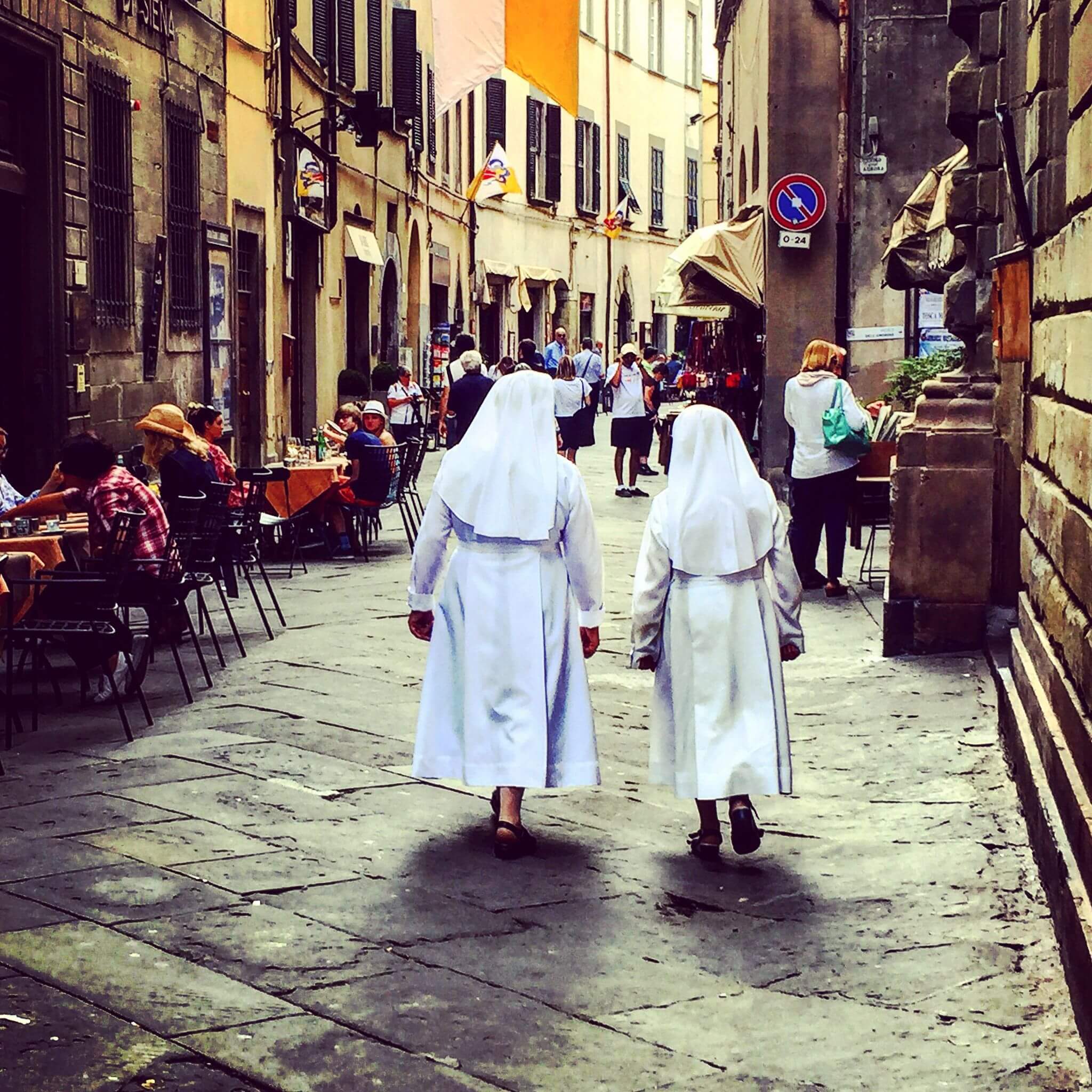
There’s a reason Cortona draws people back. Behind its Etruscan walls, steep stone streets climb between Renaissance palazzi, tiny churches, cafés and piazzas that seem to collect half the town by aperitivo time.
It’s a place best explored without too much of a plan. Start around Piazza della Repubblica and Piazza Signorelli, wander uphill when a street looks interesting, stop for coffee or lunch, and keep going until the rooftops give way to wide views across the Val di Chiana.
Cortona has plenty to reward a little more curiosity too, from Etruscan archaeology and Renaissance art to the Basilica of Santa Margherita and the quiet Franciscan hermitage of Le Celle outside town. But you don’t need to see everything. Cortona is just as good when you simply spend a few hours being there.
FROM VILLA GIOIELLA
Cortona is approximately 25 minutes by car from Villa Gioiella, making it an easy half-day trip or a lovely place to spend a long lunch and afternoon.
Start in the Piazzas
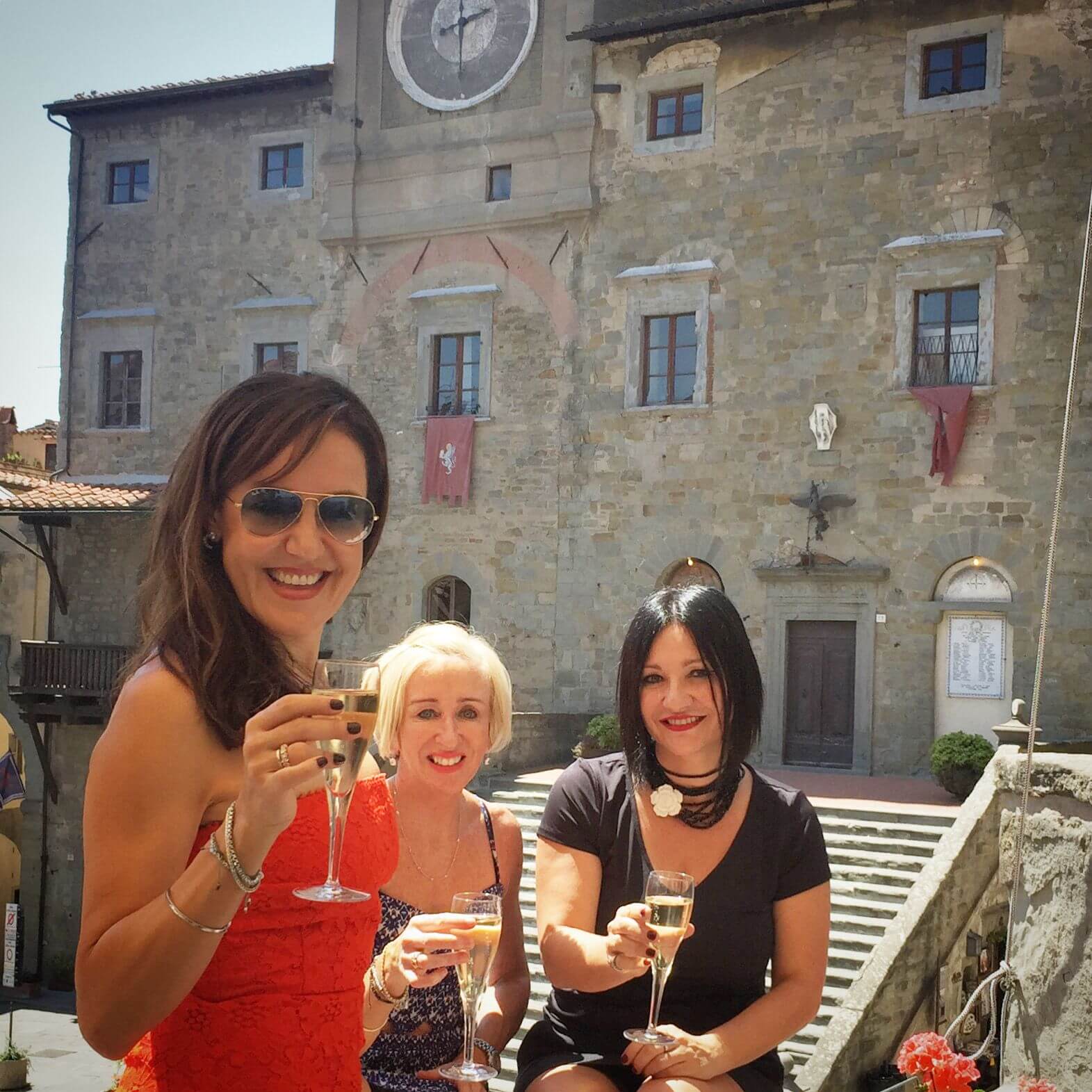
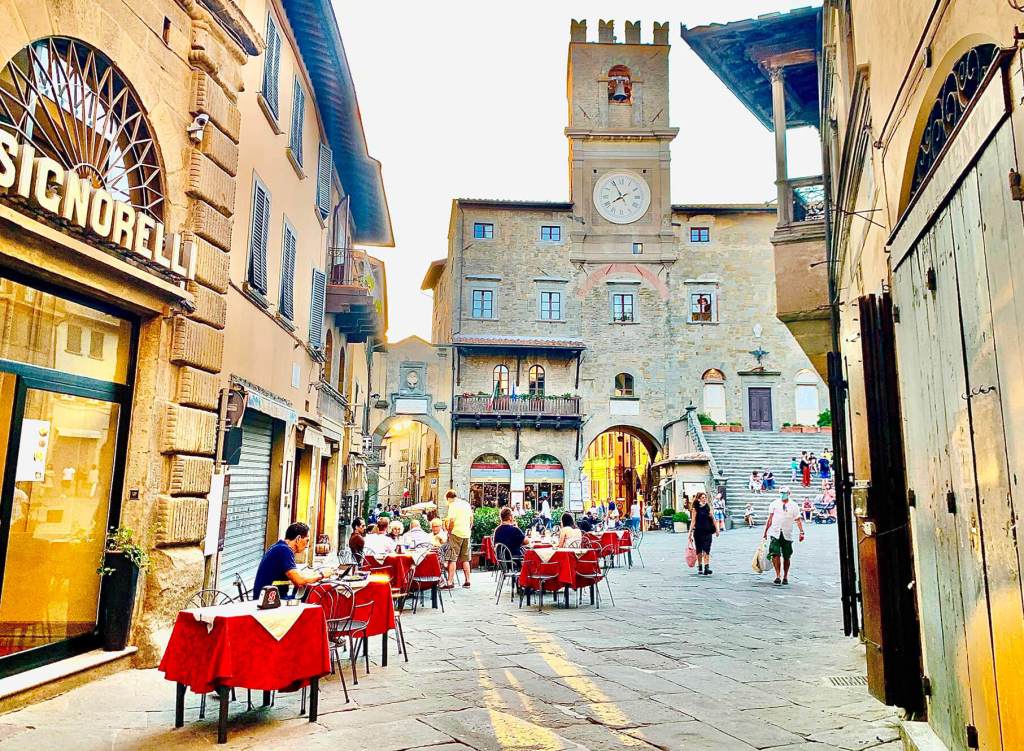
Begin in Piazza della Repubblica, the natural heart of Cortona. The Palazzo Comunale, with its broad stone staircase and clock tower, presides over a square that still feels very much part of everyday town life rather than simply somewhere to sightsee.
A few steps away, Piazza Signorelli has a slightly different character. Palazzo Casali, the Teatro Signorelli and the MAEC give it more of a cultural feel, but it’s also somewhere to linger, look around and decide which street to wander up next. The two piazzas once formed a single space on the site of Cortona’s ancient Etruscan-Roman forum.
PAUSE FOR
A coffee or aperitivo and a little people-watching. Cortona rewards sitting down almost as much as climbing up.
Art, Etruscans & an Ancient Past

Cortona’s history stretches back well beyond its medieval streets. The MAEC (Museo dell’Accademia Etrusca e della Città di Cortona) in Palazzo Casali brings together finds from Etruscan and Roman Cortona, including the extraordinary bronze Etruscan chandelier dating from the 4th century BC.
A short walk away, the Museo Diocesano is small but holds some remarkable Renaissance works. The highlight is Fra Angelico’s Annunciation, alongside works by Luca Signorelli, who was born in Cortona.
You certainly don’t need to spend your day museum-hopping, but if ancient history or Renaissance art is your thing, these two are worth making time for.
DON’T MISS
The Etruscan chandelier at MAEC. It’s one of those objects that suddenly makes Cortona’s ancient history feel considerably less abstract.
Climb Higher
For a different side of Cortona, head uphill towards the Basilica of Santa Margherita, dedicated to the town’s patron saint. It sits high above the historic centre, and the climb gradually leaves the busier streets behind for quieter lanes and increasingly expansive views across the Val di Chiana.
Just beyond it is the Fortezza del Girifalco, occupying the highest point of Cortona. The present fortress is largely a 16th-century Medici construction, built over earlier fortifications, and its walls and walkways offer wonderful views across the valley and, on a clear day, towards Lake Trasimeno.
You can drive part of the way if you’d rather save your legs, but if the weather isn’t too hot, I’d walk up from the centre. The changing view is half the pleasure.
PAUSE FOR
The panorama. Don’t rush straight back down once you reach the top.
Quieter Cortona: Eremo Le Celle
A few kilometres outside the historic centre, Eremo Le Celle feels a world away from Cortona’s busy piazzas. The Franciscan hermitage sits in a narrow wooded valley, its small stone buildings built into the slopes on either side of a stream.
Saint Francis of Assisi chose this secluded spot for prayer in 1211, making it one of the earliest Franciscan settlements. You can still see the tiny cell associated with him, along with the little church, stone bridges and paths running through the complex.
Even if the religious history isn’t particularly your thing, I think it’s worth going for the setting alone. Water, woods, old stone and very little noise make it a beautiful counterpoint to an afternoon in town.
PAUSE FOR
Nothing, really. That’s rather the point. Give yourself a little time here without trying to tick anything off.
Eat, Drink & Linger

Cortona is particularly good at turning lunch into most of an afternoon. Trattoria Toscana is one of our favourites for traditional Tuscan cooking, while Ristorante La Loggetta is a lovely choice for something a little more special, overlooking Piazza della Repubblica.
For something casual, Bar 500 on Via Nazionale is a great place to stop for coffee, lunch, a glass of wine or simply a seat outside watching Cortona go by. Via Nazionale is Cortona’s main passeggiata, and Bar 500 itself describes it as the only flat street in the historic centre, which suddenly makes sitting there feel even more sensible after all those hills.
And leave room for gelato.

Gelateria Dolce Vita, also on Via Nazionale, makes its artisan gelato fresh daily, and is exactly the sort of place worth stopping on the way back through town.
PAUSE FOR
A gelato from Dolce Vita and a seat on Via Nazionale. Sometimes the best thing to do in Cortona is stop sightseeing altogether.
Make Villa Gioiella your base
Stay on the Umbria–Tuscany border and explore Cortona, Montepulciano, Lake Trasimeno and the surrounding towns from the villa.
Check availability →