
Market morning is only the beginning.
Around Villa Gioiella, the weekly markets are often the perfect excuse to spend a little longer in town. Once the shopping bags are full, there might be a Renaissance church to wander into, a lakefront to stroll, a wine cellar to discover or simply a table in the sun waiting for lunch.
These market-day itineraries pair each market with a few favourite things to do nearby, turning an everyday local ritual into an easy half-day of exploring Umbria and Tuscany.
Chiusi (Head up to the old town)
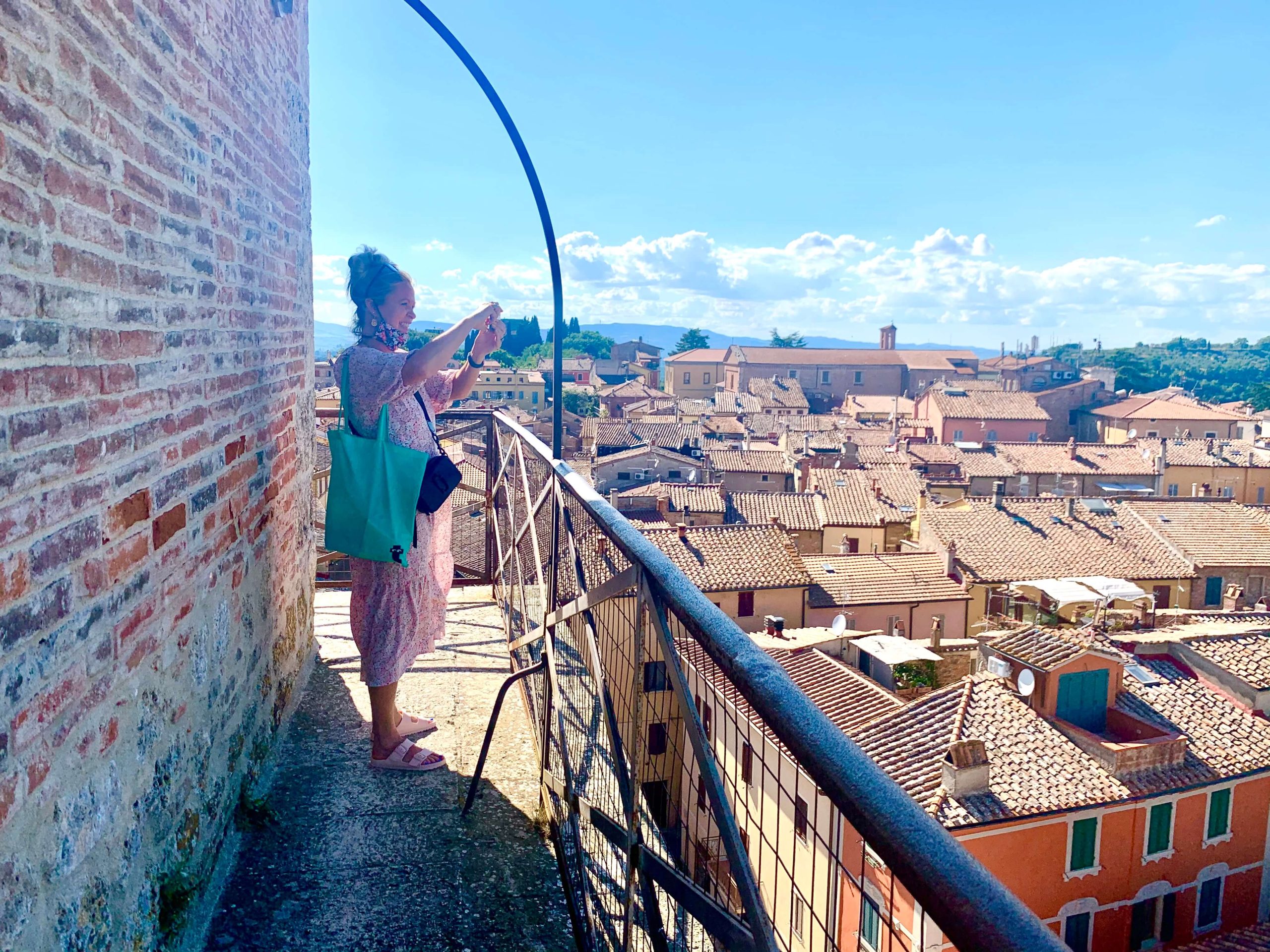
One of Tuscany’s hidden jewels, today Chiusi is a sleepy village watching over the peaceful plains of the Valdichiana. It is hard to imagine, but the town was once the major player in the Etruscan League of Twelve Cities, the Dodecaneli (I imagine it as the Etruscan version of the League of Nations).
Diocesan Museum of the Cathedral has fascinating archaeological finds and stunning works of art from Chiusi’s Christian history.
***NB entrance tickets to all of Chiusi’s historical attractions can be purchased here.
Porsenna’s Labyrinth – Winds under the Cathedral, in Piazza Duomo. It is not actually a labyrinth, but an ancient water system built by the Etruscans. In later years it was used as a dumping ground by the conquering Romans. A very interesting tour
Climb to the top of the town bell tower and you will be rewarded with spectacular views over the Valdichiana, Umbria and Tuscany.
Museo Archeologice Nazionale Etrusco: an important and spectacular curation of Chiusi’s rich history. The museum houses a collection of decorative artwork including vases, ceramics, earthenware, funerary urns and jewellery.
Museo Civico La Città, Sotterranea: a small museum with Etruscan and Roman artefacts leading to a large, fascinating underground complex and ancient water cistern.
**This must be booked in advance at the Diocesan Museum of the Cathedral **
Catacomb of St. Mustiola (Patron Saint of Chiusi). Just outside of the old town on the road to Gioiella, you will find Santa Mustiola’s catacombs. Buried here in the 3rd century CE after she was martyred for her Christian faith. Early Christians soon started burying their dead there too – to be near her body. The carved limestone catacombs contain ancient inscriptions, bones and an early Christian altar.
**This must be booked in advance at the Diocesan Museum of the Cathedral **
Citta della Pieve
Città della Pieve, also known as the “City of Perugino”, is a charming medieval hilltop town in Umbria. It is home to a number of important historical and cultural attractions.
- Masterpieces of Perugino: Città della Pieve is the stomping ground of the most revered Umbrian Renaissance painter of them all, Pietro Perugino. Naturally, his masterpieces still grace the town’s old walls. You will find The Adoration of the Magi at the Oratory of Santa Maria dei Bianchi. The Deposition from the Cross (famous for its “dramatic composition and emotional realism”) is at the Diocesan civic museum of Santa Maria dei Servi. The Baptism of Christ, one of Perugino’s early works “notable for its beautiful landscapes and delicate figures”, is in the Cathedral of San Gervasio and Protasio.
- Palazzo della Corgna is a stately summer home built in the 16th century by Ascanio della Corgna, a powerful condottiero (general) and cardinal. The palace is now home to the Natural History and Territory Museum, with exhibit collections on the natural history and culture of this region.
Castiglione del Lago
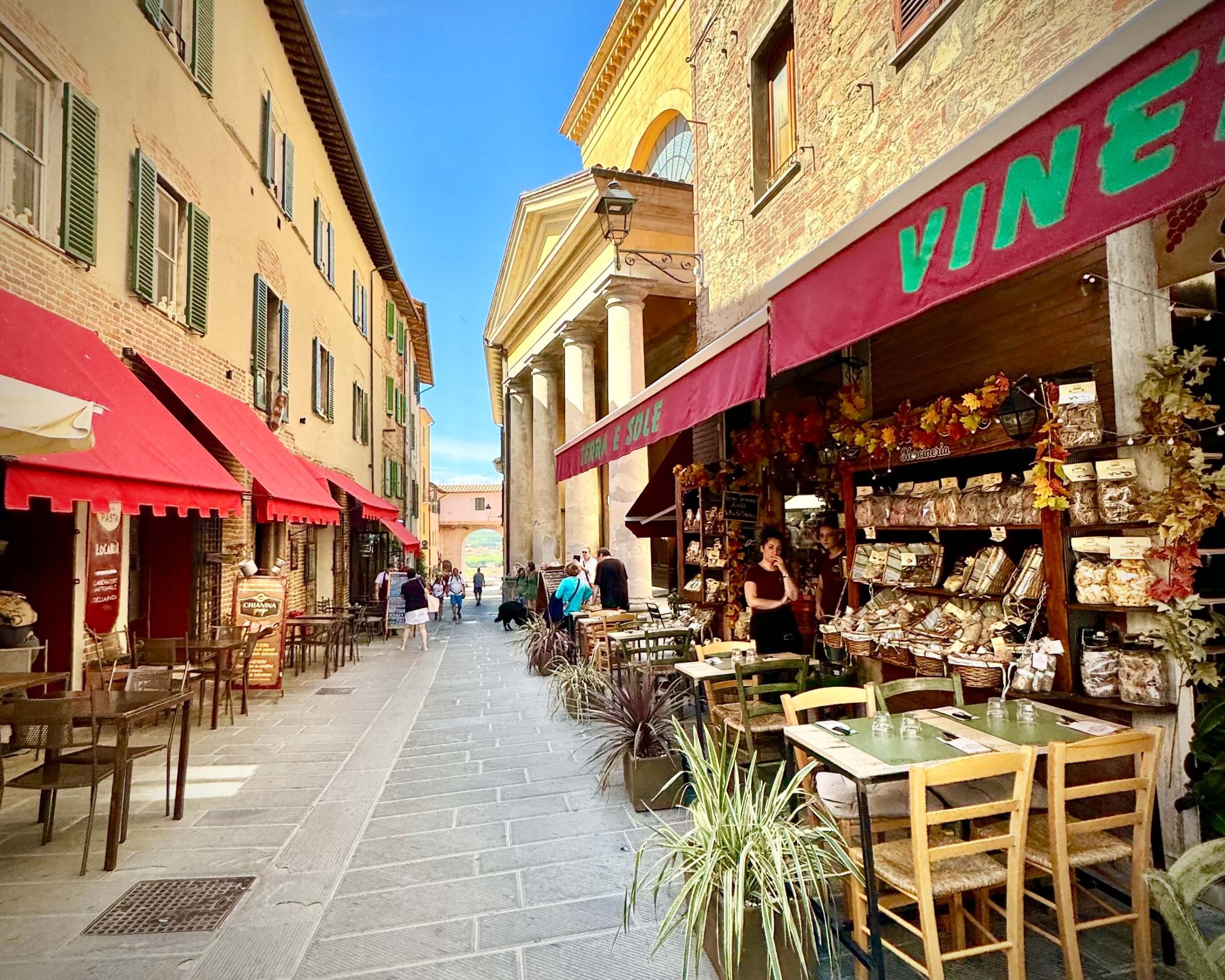
Rocca del Leone Castle: Located on the hilltop overlooking Lake Trasimeno, you will experience panoramic views of the lake and the surrounding countryside. A well-preserved castle that has retained much of its medieval charm. The architecture is characterised by its polygonal wall and square Guelph (Pope-supporting) battlements, four towers, and a triangular keep.
Palazzo della Corgna. If the name sounds familiar from Città della Pieve, this was the original palace built in the 16th century by nobleman Ascanio della Corgna. The interior is decorated with frescoes by Niccolo Circignani depicting Roman myths. There’s a sweet museum with a collection of artefacts from the castle’s history (and treasures from Gioiella’s very own Etruscan tomb). Linked to Rocca del Leone castle by a ‘secret’ passageway.
Restaurants: If you have digested the tasty market treats, head for one of the many amazing restaurants in town: Squad Garden, La Cantina, Osteria le Scalette
Montepulciano

After the market, head up into Montepulciano’s historic centre and make your way towards Piazza Grande, stopping to explore the Renaissance streets and palazzi along the way. Visit one of the town’s historic wine cellars for a tasting of Vino Nobile di Montepulciano, then stay for lunch or an aperitivo with views across the Val di Chiana and towards the Val d’Orcia.
If you have a little more time, continue down to the
elegant Renaissance church of Tempio di San Biagio, just outside the town walls.
Tavernelle Market + Panicale
Start the morning at Tavernelle’s weekly market, a useful local stop for produce, household goods and a glimpse of everyday Umbrian life.
Once you’ve finished shopping, drive up to Panicale, where the pace changes completely. Wander the compact medieval centre, explore the little lanes around Piazza Umberto I and enjoy the views stretching towards Lake Trasimeno.
If you have time, visit the Church of San Sebastiano, home to a fresco attributed to Perugino, then settle in for lunch, coffee or an aperitivo before heading home.
It’s a nice pairing because Tavernelle gives you the authentic market morning, while Panicale supplies the beauty afterwards.
Camucia + Cortona
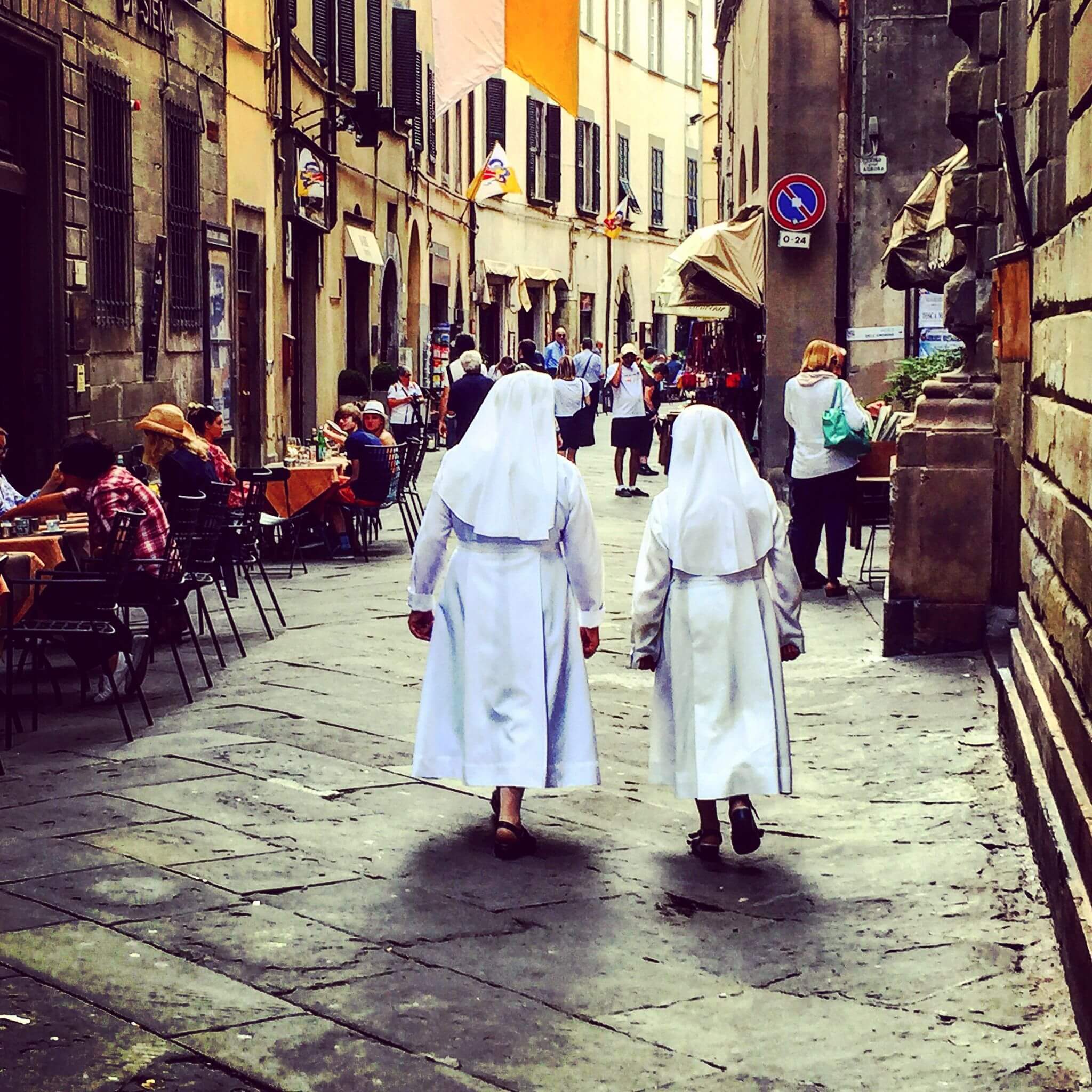
Perhaps Francis Mayes said it best in her New York Times article: “Most tourists in Tuscany pass right through Camucia; it’s just the “modern” spillover from the venerable and dominant hilltown above. But “modern” is relative. Among the frutta and verdura shops, the hardware and seed stores, you happen on a couple of Etruscan tombs.”
Paciano

Sitting on the hillside, in a sea of in olive groves, it is easy to see why Paciano became known as ‘the Città dell’Olio’.
- Pinacoteca or civic art gallery, with art that stretches from the Etruscans through to 18th-century religious frescoes, statues and paintings.
- The Church of San Giuseppe and the parochial museum
- The Church of San Sebastiano in the fifteenth century with a cemetery for plague victims. A little less gruesome is that on the back wall of the church you will find a fresco titled Martyrdom of San Sebastiano by Citta dell Pieve local Pietro Perugino, aka ‘Il Perugino’, known as the greatest Umbrian painter of the Renaissance.
Cortona

- Visit the Etruscan Museum to learn about the rich history of the Etruscans, who inhabited the region in ancient times. See the famous bronze Cortona Chandelier, dating back to the 5th century BC, and admire the collection of Etruscan art, including vases, cups, and plates, funeral urns, and paintings.
- Visit the Diocesan Museum to admire the collection of religious art from the Middle Ages to the present day, including paintings, sculptures, and sacred vessels. See a collection of religious art from the Middle Ages to the present day. See the Madonna del Calcinaio, a 13th-century fresco by Margaritone d’Arezzo.
- Santa Margherita Basilica is a beautiful Romanesque church with a magnificent interior. Santa Margherita died in 1297, so my lasting memory is seeing her actual ‘incorrupt’ body, still on show in a silver casket.
- Piazza Garibaldi. This square is home to the Chiesa di San Domenico, a 13th-century church with a beautiful Gothic facade. After the enchantment of the view over Lake Trasimeno is broken, there are many shops and restaurants to capture your attention.
Make a day of it
The weekly markets are part shopping trip, part local ritual, and a very good excuse to explore somewhere new. Pick a market, linger for lunch, follow a lane you hadn’t planned to take, and let the rest of the day unfold from there.
Planning your stay?
Villa Gioiella makes an easy base for exploring the market towns of Umbria and Tuscany.